

The Ultimate Guide to Digitally Assisted Road Inspection, Blog 4/5
Maintaining road infrastructure requires careful use of limited budgets.
Inspection programmes play an essential role in understanding network condition, but inspections themselves can also be expensive.
For many organisations, the challenge is not simply collecting more data — it is collecting the right data in a cost-effective way.
| Making better use of inspection budgets
Traditional road inspection programS often rely on specialised survey vehicles and equipment. While these systems can provide high-quality data, they also require significant investment.
At the same time, the output of many inspection programmes remains a static report.
This raises an important question for road owners:
How can inspection budgets create long-term value for asset management?
The answer lies in making inspection data more accessible and easier to reuse across the maintenance process.
| Lowering the barrier to data collection
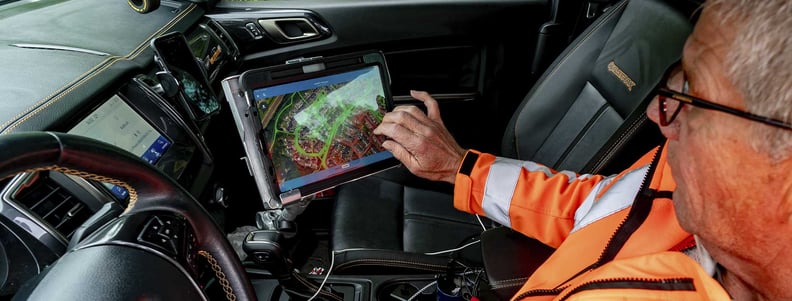
Recent developments in video inspection technology make it possible to collect useful road condition data with relatively simple equipment.
Compact cameras, such as those mounted on small vehicles, allow road networks to be recorded quickly and at relatively low cost.
This approach makes it possible to collect inspection data:
- more frequently
- across larger areas
- without major upfront investment
The recorded footage can then be used to create a digital representation of the road network that inspectors and asset managers can analyse later.
| Flexible inspection workflows
Lower-cost data collection also allows organisations to adopt more flexible inspection strategies.
Instead of relying exclusively on large-scale survey campaigns, inspection teams can capture road footage as part of regular operations.
Different types of vehicles (including smaller electric vehicles or inspection vehicles used for other purposes) can be equipped with cameras to collect road data during routine activities.
This flexibility allows organisations to build a more continuous understanding of network condition.

| Focus resources where they matter most
Ultimately, inspection programs exist to support maintenance decisions.
By reducing the cost and complexity of collecting inspection data, organisations can allocate more of their budgets toward the actual goal: maintaining and improving the road network.
Digitally assisted inspection helps ensure that limited resources are directed toward the right interventions at the right time.

Follow us on LinkedIn to stay up to date with our latest contributions. Next Blog (5/5):
AI can’t solve everything just yet — your human skills count.