

Why Inspech?
Inspech helps inspection teams work more efficiently while keeping inspectors in control of their assessments. Structured inspections and access to previous results make it easier to follow changes in road condition. Sharing validated findings and images gives inspection providers and road owners a common basis for collaboration and maintenance discussions.

Save time on
road inspections
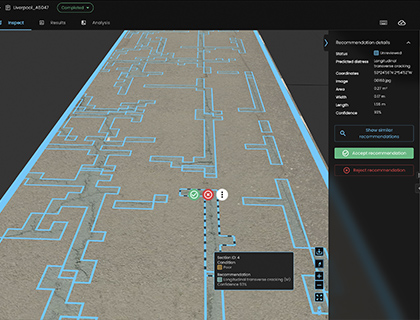
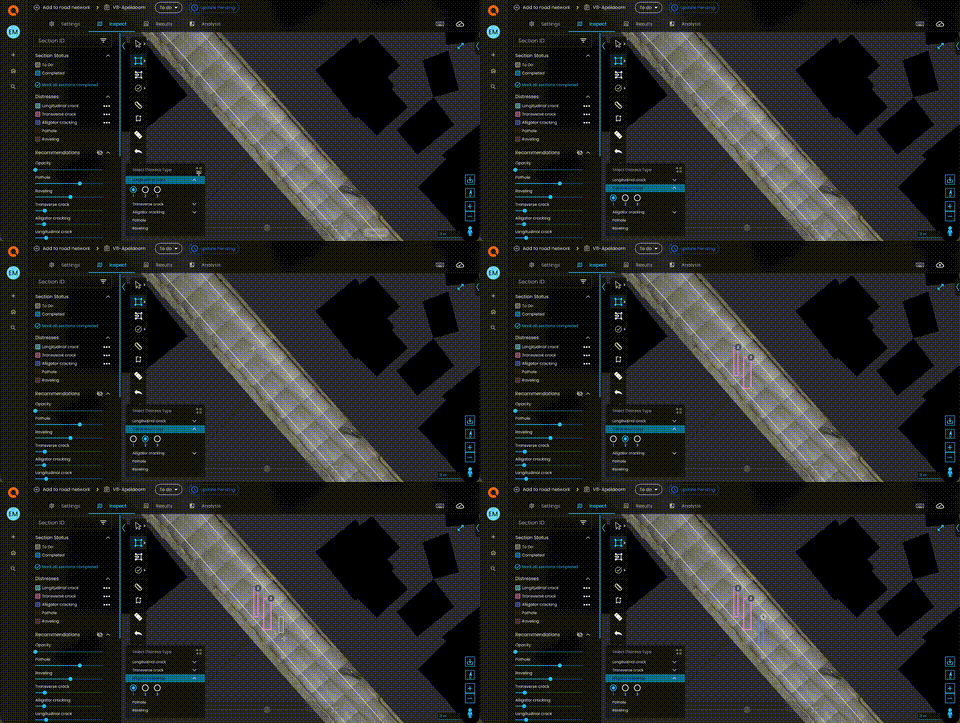
AI Automation reduces the time inspectors spend finding and recording defects. It analyses the road imagery and prepares potential defects and suggested classifications for review, giving inspectors a head start on the assessment.
Instead of identifying and drawing every defect from scratch, inspectors can focus on checking the recommendations, making adjustments and adding anything the AI has missed. Bulk review tools let them handle multiple recommendations together, further reducing repetitive work. This helps inspection teams complete assessments faster and take on more inspection work with their available capacity.
Make the most of
your inspectors’ expertise
Experienced inspectors bring knowledge of pavement behaviour, local road conditions and inspection methods that gives an assessment its professional value. Inspech helps teams benefit from that expertise while reducing the repetitive work around it.
Inspectors can concentrate on findings that need interpretation and apply their judgement to the final assessment. The result is an inspection they can explain and stand behind when discussing road conditions with clients and colleagues.

Build consistency
into your inspections
Consistent assessments make it easier to compare road sections, combine work from different inspectors and interpret results across inspection cycles. Shared inspection methods and classification templates give teams a common basis for assessing and reporting visible defects.
This reduces avoidable differences in how findings are recorded and makes results easier to review and use. Inspection providers can deliver a more consistent service across projects, while road owners gain a clearer basis for comparing conditions across their network.
Follow how road
conditions change
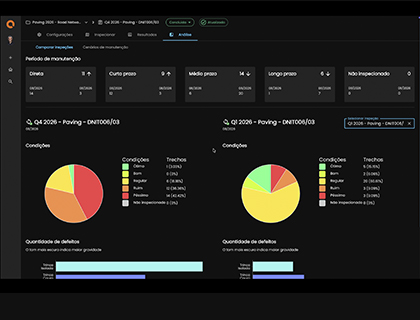
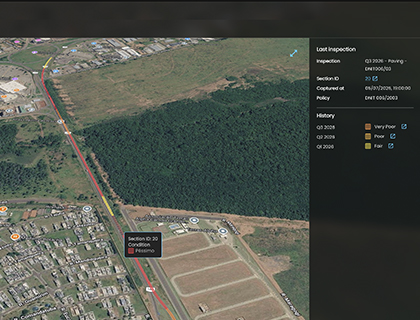
More current inspection information helps engineers and asset managers review maintenance priorities as road conditions develop. Access to previous results provides context for assessing deterioration and reviewing visible changes following maintenance.
By reducing the work involved in each assessment, Inspech makes more frequent inspections practical. Teams can build a more current view of their network and use comparisons between inspection cycles to identify where closer investigation or maintenance attention may be needed.
Work with your
existing systems
Use Inspech’s inspection results within the systems and processes your organisation already relies on. Supported exports and configured API routes make validated findings available for GIS, reporting and road management workflows, reducing the need to re-enter inspection data.
This lets you improve the inspection process while continuing to use your existing tools for analysis and maintenance planning. Visual condition information adds context alongside engineering measurements, giving your team more evidence to work with.
Improve
collaboration
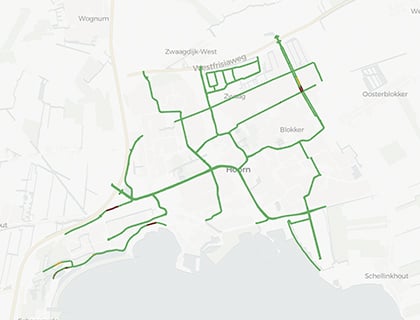
Give inspection teams and road owners a shared basis for prioritising maintenance and planning further action. Access to the same validated findings and road imagery helps clients understand the assessments behind a recommendation, discuss priorities with their inspection provider and make better-informed maintenance decisions.
Through complimentary read-only access to completed inspections, clients can examine the evidence behind the report whenever questions arise. This makes it easier to bring detailed condition information into planning discussions and explain the basis for maintenance priorities to colleagues and other stakeholders.

Real-world evidence
Inspech supports the following inspection methods for classifying visible defects and evaluating road sections. The available classifications and evaluations depend on the selected method and inspection configuration.
DTAP: More than 10,000 lane-km in the first year
Unihorn: Connecting visual inspection with pavement engineering
How Unihorn uses Inspech alongside engineering measurements and investigations to bring visual inspection findings into its wider assessment and advisory work.
Read the client success story →
See what Inspech could do for your team
Discover how Inspech could help your team save inspection time, deliver consistent assessments and collaborate more effectively. In a live demo, we’ll explore the tools relevant to your work and discuss how the results can support your maintenance and planning processes.
Frequently asked questions
Inspech reduces repetitive work by preparing potential defect detections for review and providing tools for processing multiple recommendations efficiently. Inspectors remain responsible for checking classifications, correcting findings and validating the final assessment. This allows teams to spend less time on routine annotation while preserving the professional judgement required for reliable inspection results.
Inspech supports standardised inspection methods and reusable classification templates, giving inspectors a common framework for recording defects and evaluating road sections. This reduces avoidable differences in how assessments are documented. Professional interpretation remains important, but a consistent methodology makes findings easier to compare, review and combine across projects and inspection cycles.
There is no single inspection frequency suitable for every road network. The appropriate interval depends on factors such as road function, traffic loading, pavement condition, contractual requirements and maintenance strategy. By making visual inspections more efficient, Inspech enables organisations to conduct additional assessments where more frequent information would support better decisions.
Yes. Comparing validated findings and road imagery from before and after maintenance can show how visible pavement conditions have changed. This helps engineers review whether previously recorded defects remain visible, whether new deterioration has developed and where further investigation may be appropriate. Such comparisons provide useful evidence but do not replace a complete engineering assessment of treatment performance.
Maintenance timing can significantly influence pavement lifecycle costs. More current information about developing defects helps engineers identify where targeted intervention may still be appropriate, potentially avoiding more extensive rehabilitation later. Inspech supports this process by making recurring visual inspections practical and providing validated evidence for maintenance decisions. Actual savings depend on the condition of the pavement, the interventions selected and their timing.